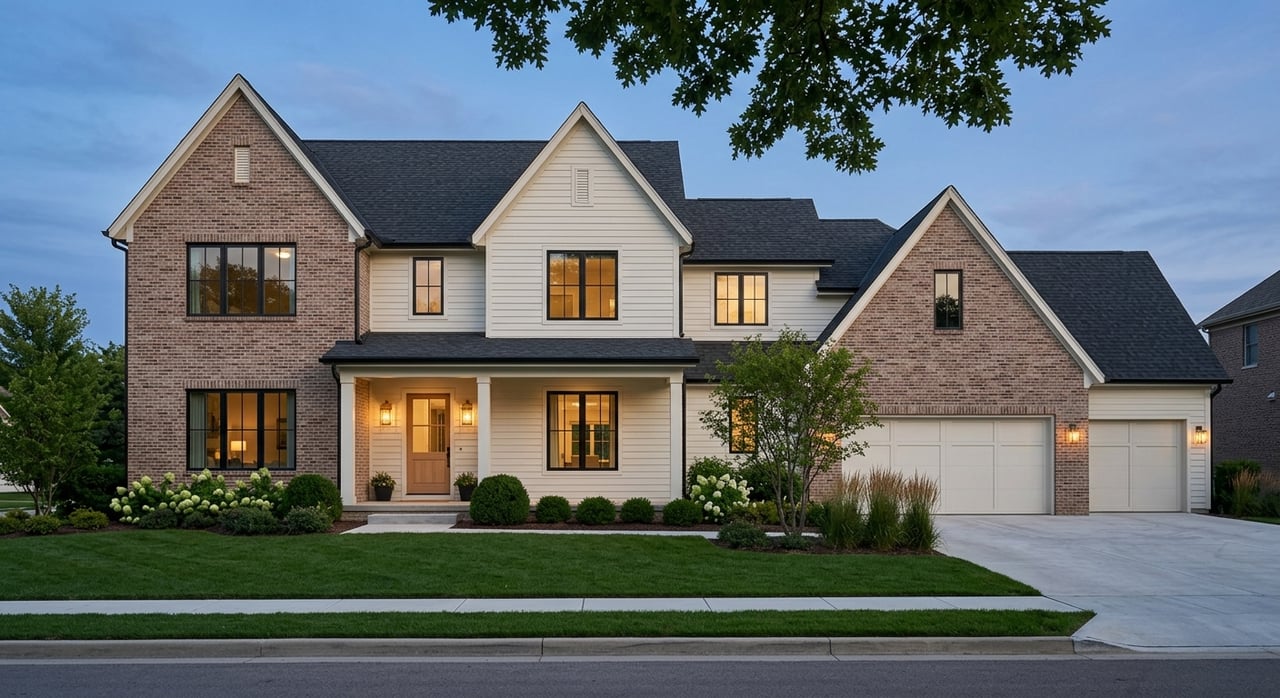
A First-Time Buyer’s Guide To Noblesville Neighborhoods
June 18, 2026
June 18, 2026
Wondering where to start in Noblesville when every neighborhood seems to offer something different? If you are buying your first home, that question is normal, especially in a market where price, commute, housing style, and daily convenience can change from one part of the city to the next. This guide will help you sort Noblesville by lifestyle and budget so you can focus your search with more confidence. Let’s dive in.
Noblesville is not a one-note market. Recent public data shows a citywide typical home value of $393,342, but the two main ZIP codes tell different stories. In 46060, the typical home value is $354,746 with a median list price of $371,500, while 46062 shows a typical home value of $441,194 and a median list price of $438,317.
Speed matters too, especially for first-time buyers trying to plan around timing. Homes in 46060 take about 31 days to go pending, while homes in 46062 take about 10 days. That gives you a quick snapshot of how much conditions can shift depending on where you look.
A smart Noblesville search is usually less about chasing one neighborhood name and more about matching your priorities to the right area. If you want walkability and character, your search may look very different than if you want newer construction, easier highway access, or a more traditional subdivision layout.
If you picture tree-lined streets, older homes, and a more connected feel to downtown, start in Noblesville’s historic core and the neighborhoods around it. This area includes historic zones such as Pioneer Homestead, Johnstown, Gilded Age, Midland, Federal Hill, Lincoln Park, Old Second Ward, and New Frontier/Broadview Manor.
These neighborhoods developed across different eras, from the 1850s through the postwar period of the 1940s and 1950s. That means the housing stock can vary a lot in age, style, and layout. For a first-time buyer, that variety can create more options, but it also means you should look closely at condition, updates, and long-term maintenance.
The biggest draw here is lifestyle. This part of Noblesville is often the best fit if you care more about walkability, local character, and being near community spaces than you do about a brand-new, more uniform subdivision feel.
Downtown amenities help define this area. The Riverwalk connects Forest Park and the Historic Courthouse Square, Federal Hill Commons hosts concerts, festivals, farmers markets, and community events, and Seminary Park is used for art installations and seasonal gatherings.
If you want to be close to trails, parks, and downtown activity, these neighborhoods deserve a serious look. You may find that being able to enjoy those amenities changes how you think about your commute, weekend routine, or even the type of home you are willing to buy.
Older neighborhoods can offer charm, but they are rarely cookie-cutter. One block may feel very different from the next, and one home may have major updates while another may need more work. That makes showings and inspections especially important.
If this area is on your shortlist, ask practical questions early. Find out how old the major systems are, what updates have been completed, and how the home compares to nearby properties in size, parking, and lot setup.
If you want to be near downtown but are also open to newer or more mixed housing types, the West Gateway area is worth understanding. The city’s West Gateway Master Plan covers 424 acres about one mile west of the White River and is designed as a walkable district connected to downtown, the White River, and the Riverwalk over the next 15 to 20 years.
This part of Noblesville feels more transitional than the historic core or many established subdivisions. You will see more infill development, more mixed-use planning, and more attached housing options. For some first-time buyers, that creates flexibility, especially if a townhome or lower-maintenance setup feels like a better first step into ownership.
Projects in this area include RiverWest, with rental apartments, age-restricted apartments, for-sale townhomes, and commercial space, plus Federal Hill Apartments west of Federal Hill Commons. The city’s subdivision map also shows downtown-adjacent and west-side names such as RiverWest, Noble West, West Haven at Noble West, East Haven at Noble West, Townes at Noble West, Lofts on Tenth, and RiverWalk Commons.
This area can work well if you want proximity to downtown and trails without limiting yourself to older housing stock. It may also appeal if you like the idea of a neighborhood that continues to evolve over time.
For a first-time buyer, that can be exciting, but it also requires a little more homework. Some areas may still be in active redevelopment, so what you see today may not be exactly what the area looks like a few years from now.
Before you move forward in a west-side or downtown-adjacent area, confirm whether the surrounding project is complete or still developing. Ask how much of the area is existing housing versus planned housing. Then drive the area at different times of day to get a realistic feel for traffic, noise, and access.
If your priority is newer construction, retail access, and easier highway connections, focus on the Hamilton Town Center and Exit 210 corridor. Hamilton Town Center is an open-air shopping, dining, and entertainment center at SR 238 and I-69 Exit 210 with more than 85 shops and dining options.
This corridor is one of the clearest anchors for Noblesville’s newer-growth market. The city’s Hyde Park plan is tied to this area and includes a mix of senior living, multi-family, townhomes, office, and neighborhood-serving retail within walking and biking distance of Hamilton Town Center.
You will also find many commonly searched neighborhood names here, including Conner Crossing, Cumberland Pointe, Prairie Lakes, Pebble Brook Village, Pebble Brook Villas, Pebble Brook Crossing, Sagamore, Stony Creek Estates, Stony Creek Marketplace, Highlands Prairie, Highlands at Stony Creek, and Townhomes at Stony Creek.
For first-time buyers, this corridor often means newer homes, HOA-style subdivision living, and close access to shopping and major roads. It may be a strong fit if you value convenience and prefer a home with newer finishes or fewer immediate update projects.
It is also important to set expectations on price. Noblesville’s residential market analysis notes that new construction is being built at the higher end of the market, so newer neighborhoods may stretch beyond some first-time buyer budgets more quickly than expected.
This area gives you strong access to I-69 and major corridors, which can be a big plus if your work routine depends on driving. Noblesville is primarily a car-based market, with access from I-69, I-465, and Highways 31, 32, 37, and 38.
At the same time, location is not only about commute miles. Hamilton Town Center is a major activity hub, and Ruoff Music Center is also in Noblesville on 228 acres. If you are searching in the northeast growth corridor or east side, event-night traffic and parking patterns are worth testing before you buy.
If you want a more established subdivision feel, look at the reservoir and harbor-oriented pockets shown on the city’s subdivision map. These include names such as South Harbour, North Harbour, East Harbour, West Harbour, Harbour Village, Harbour Woods, Harbour Point, Harbour Overlook, Lakeside Estates, Morse Pointe, Windwood at Morse, Country Lake Estates, and Morse Park Estates.
These areas can appeal to buyers who want a more traditional neighborhood pattern. Depending on the specific subdivision, you may find a different balance of lot size, home age, street layout, and access to nearby recreation.
For first-time buyers, these neighborhoods can be a helpful middle ground. They may offer a more established setting than the newest growth corridor while still providing the familiar feel many buyers want when they picture suburban living.
Neighborhood choice in Noblesville is not just about the house itself. The city’s parks and trail system can have a real impact on how a neighborhood feels and how you spend your time. Noblesville manages more than 876 acres of parkland, seven developed parks, 109 acres of undeveloped properties, 127 miles of trails and greenways, and two golf courses.
Major parks include Dillon Park on the west side, Federal Hill Commons downtown, Finch Creek Park, and Forest Park, which spans more than 150 acres. For many buyers, being close to one of these spaces can matter just as much as being close to a retail center.
The trail network is especially useful because it connects neighborhoods and destinations. The White River Greenway links Forest Park and Downtown Noblesville, the Riverwalk loops Forest Park and the Historic Courthouse Square, the Midland Trace Trail extends west toward Westfield, and Finch Creek Trail connects nearby communities to Finch Creek Park and the Fieldhouse.
If you are feeling overwhelmed, use a simple filter: budget first, lifestyle second, and neighborhood name third. That order tends to work better in Noblesville because the city includes several very different residential patterns.
Here is a practical way to break it down:
This framework helps you compare neighborhoods based on how you actually want to live, not just on what sounds familiar online.
Once you have a few target areas, your next step is to test them like a local. Maps help, but they do not tell you everything about timing, traffic, or how connected an area feels in real life.
Use this checklist before you make a decision:
That last step matters in Noblesville. Noblesville Schools’ middle-school boundary map uses the White River as the dividing line between East and West Middle Schools, with a small exception off 146th Street between Graylan Place and River Road.
A first home is both a financial decision and a lifestyle decision. The right fit is not always the newest home or the most popular neighborhood. It is the one that matches your budget, commute, and daily rhythm with the least amount of friction.
If you want a more strategic way to sort through Noblesville neighborhoods, Courtney Walsh Baisa can help you narrow the field, compare tradeoffs, and move forward with a clear plan.
Stay up to date on the latest real estate trends.
Luxury real estate demands strategy, precision, and insight. With a data-driven approach, expert marketing, and a deep understanding of buyer behavior, every step is designed to maximize results and deliver a seamless, elevated experience.